
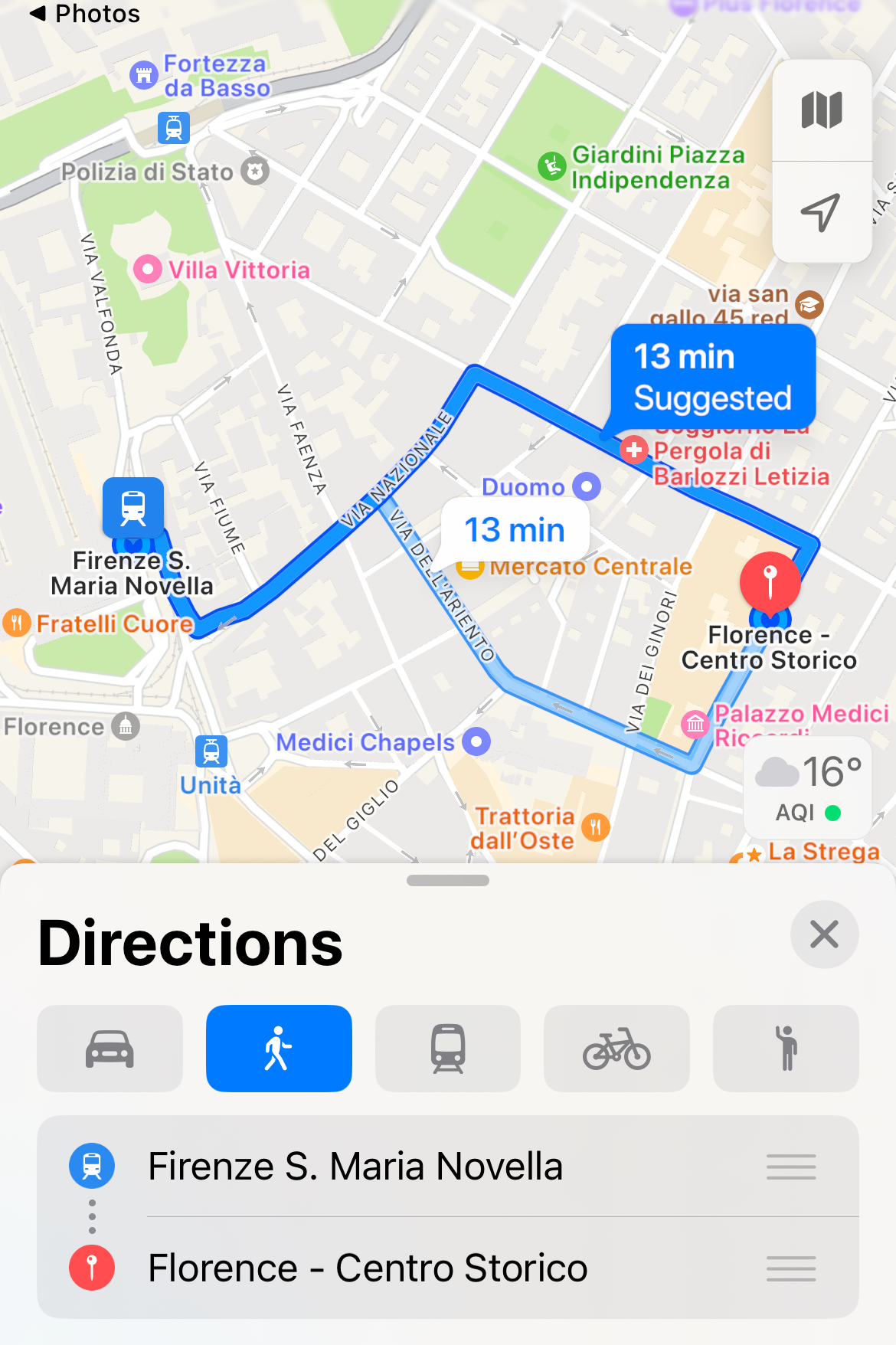
Florence (Firenze) is a 40-minute high speed train ride (Frecciarossa) from Bologna. We hopped on a train around 10:45 and arrived in Florence by 11:30. There was some construction happening at the time, so it took us about 20 minutes to wrestle our luggage from Firenze Santa Maria Novella station to our Airbnb in the Centro Storico.
Our first afternoon in Florence was spent exploring the stunning Piazza del Duomo. By lunchtime, we were famished and thirsty, so we grabbed a bite and some coffee right there in the square. The options were limited and the prices were a bit shocking! Lesson learned: for the best food (and value!), it pays to wander a little further afield. Other than that, the rest of our time in Florence was fantastic! We explored hidden gems and discovered some incredible restaurants and cafes (see my second thread of Florence trip for details!).
Plan your activities in Firenze
We purchased the Brunelleschi Pass for 30 EUR for each of us. That grants access to the Duomo’s must-sees for 3 days after your first booked entry. This includes the iconic dome, bell tower, baptistery, Santa Reparata and museum. Unfortunately, with limited time, we had to skip the Opera del Duomo Museum (housing original Duomo artworks) and the Santa Reparata (a fascinating crypt beneath the cathedral).
Santa Reparata was the original cathedral of Florence. By the 9th century, it was the main basilica of the city. As the city grew, the church considered too small for the blooming city. In 1296, some work started to build a bigger church on top of Santa Reparata and once the new cathedral of Santa Maria del Fiore was completed, the original place was started to be used as a place for burials, including some noble names like Filippo Brunelleschi- the architect who invented the stunning dome of the famous Santa Maria del Fiore. None the less, I was fascinated seeing the mosaics floor while looking up information about this monument history.
Back to our schedule! After lunch, we had a time slot reserved to climb Giotto’s Bell Tower at 3:45 pm. Let me tell you, that line was no joke! Just a heads-up for future climbers: ditch the backpacks and big bags – they’ll make you check them at the cloakroom. The spiral staircase inside the Bell Tower is super narrow, winding its way up like a corkscrew. There are breaks between levels, and thankfully, small windows on the tower wall provide some fresh air circulation. When you finally reach the top, the view of the city– a breathtaking reward for your sweaty climb!
The Baptistery was our next stop. Unfortunately, there was some maintenance work underway, limiting what we could see. However, the phenomenal mosaic ceiling is a sight to behold!

Saving the best for last, we went to the iconic Duomo, a true Renaissance masterpiece and symbol of Florence. The line to enter the cathedral itself snaked around the block, and with estimates of at least 40-minute to 1-hour wait under the hot sun, we decided to focus on the dome instead (which had a separate line and tour). The line for the dome climb was a tad shorter.
Built between 1420 and 1436, the Brunelleschi Dome is named after its brilliant architect, Filippo Brunelleschi. His ingenious design allowing construction of the dome to prevent collapsing from inside.
This architectural marvel features two domes – an inner dome with a diameter of 45.5 meters and an outer shell spanning 54.8 meters. The space between these two shells contains a staircase that winds its way up to the marble lantern at the summit.
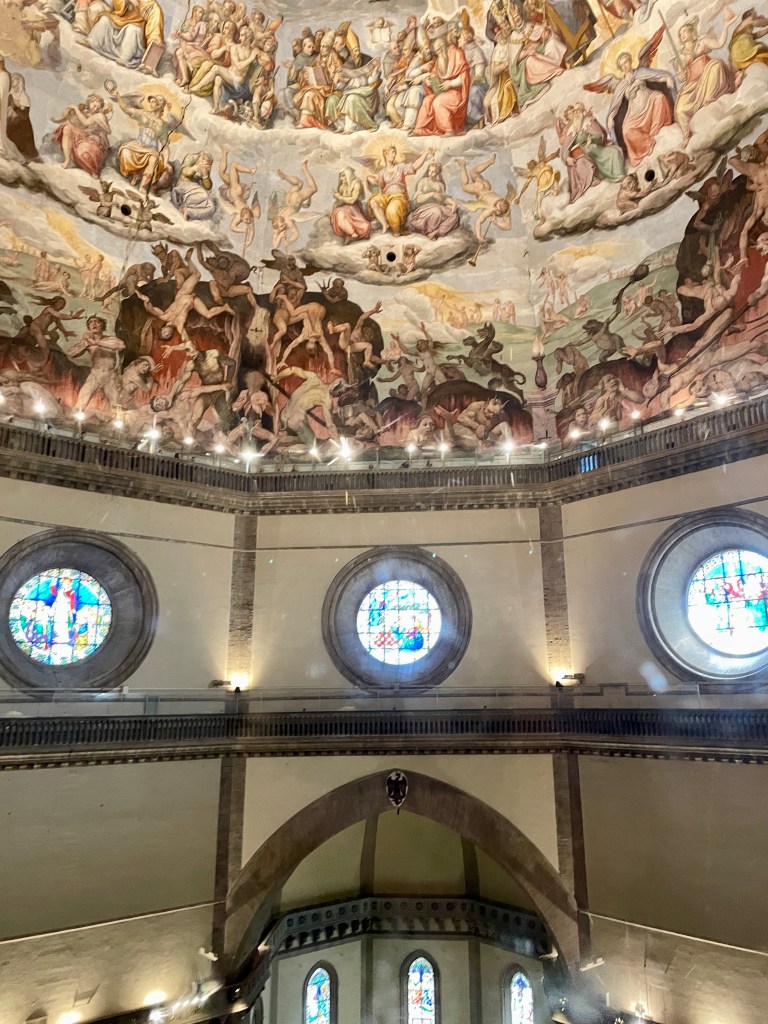
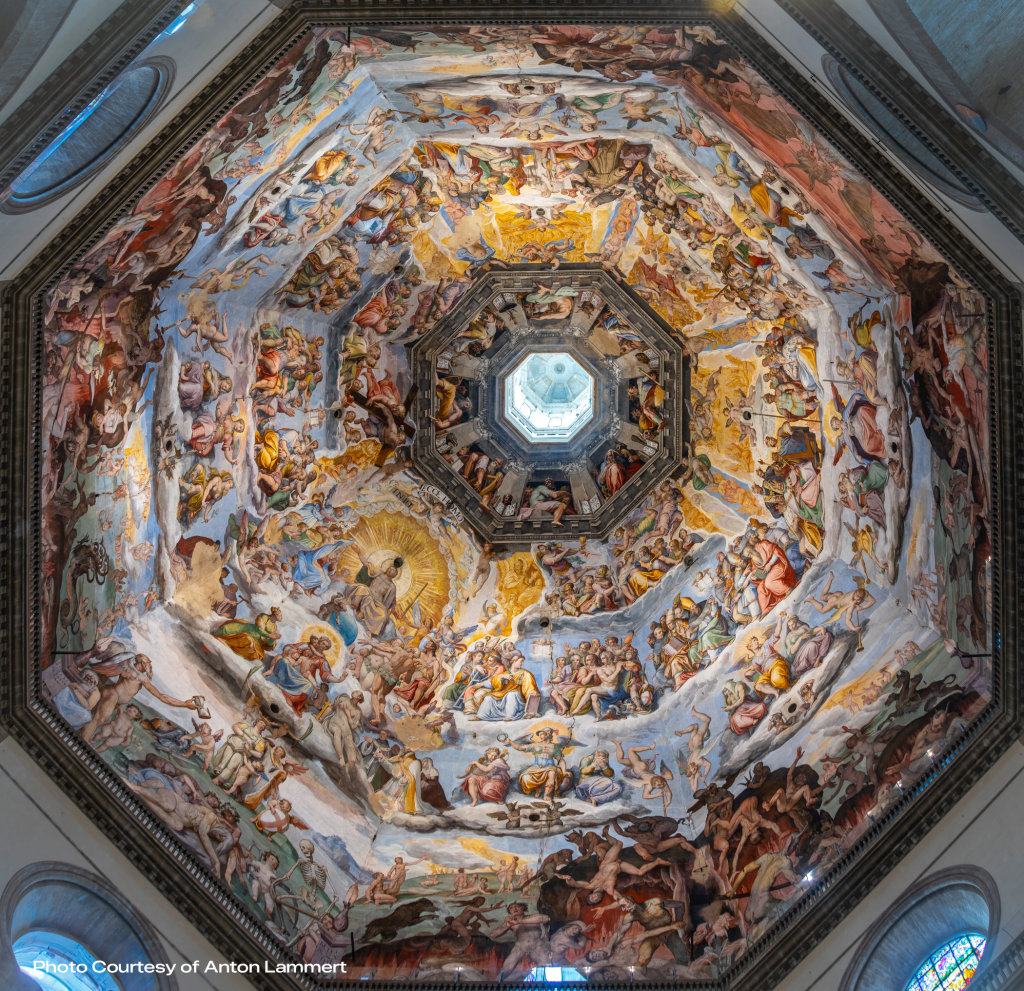
We were able to see the magnificent Last Judgement mural from the upper level of the dome on our way climbing to the lantern. The perspective and colors were truly fascinating!
While I didn’t get to explore the entire cathedral itself, information about its artworks, including the Last Judgement mural, is available at https://duomo.firenze.it/en/about-us/history/art.
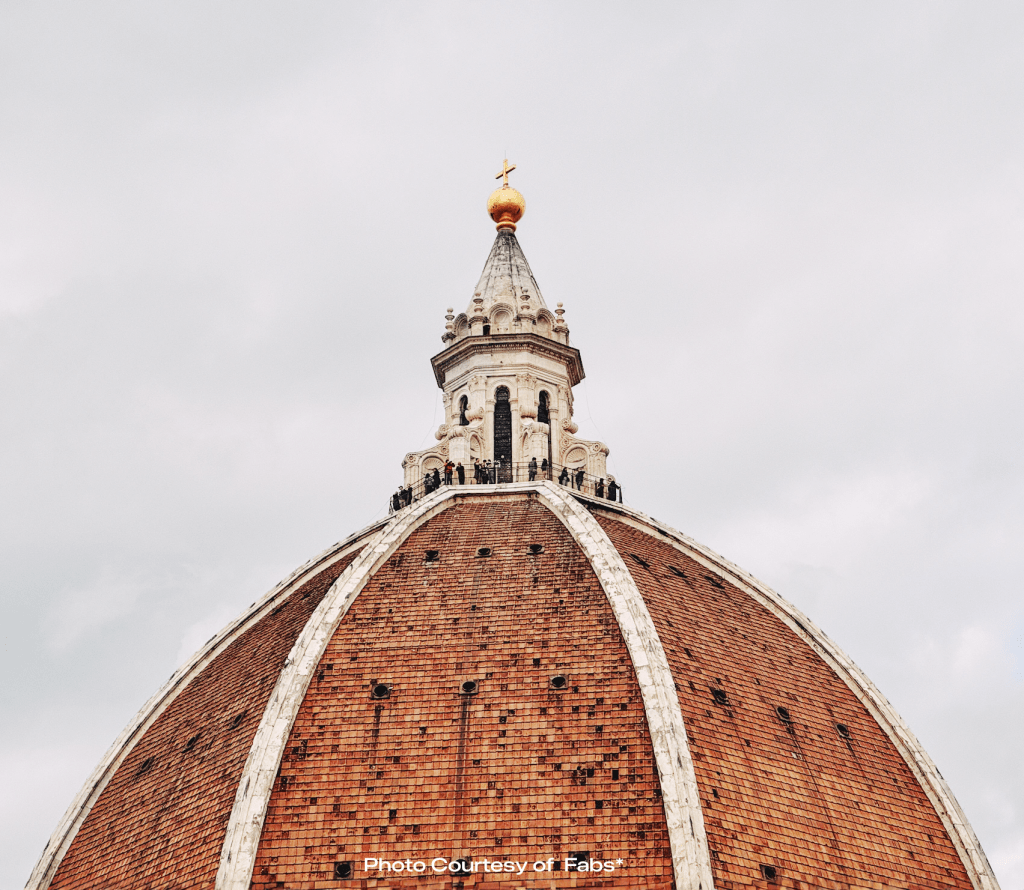
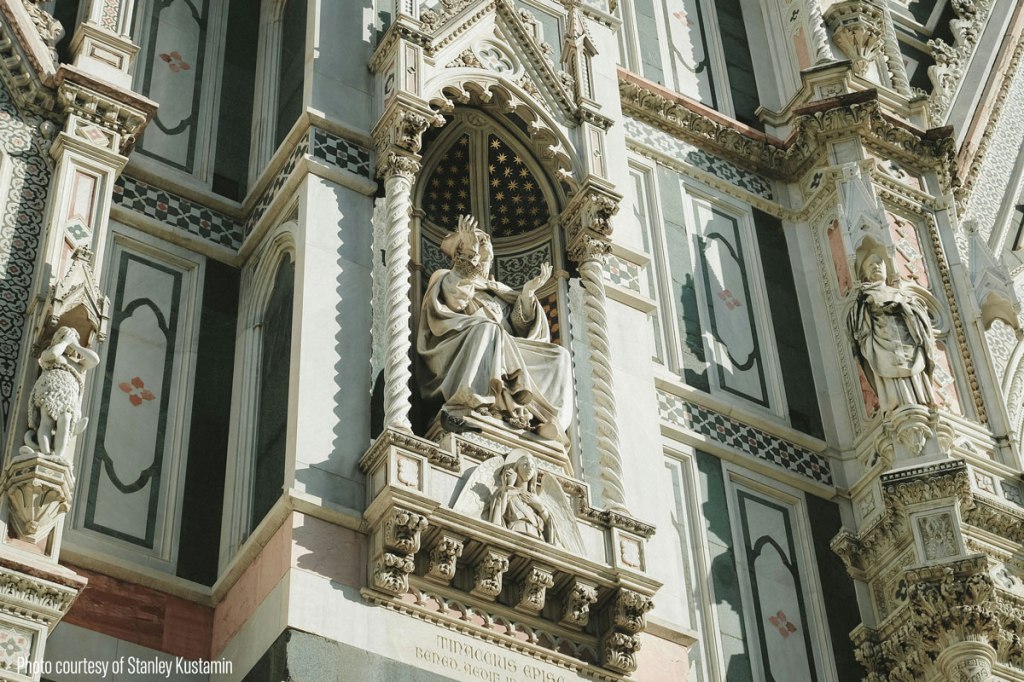
The Duomo was a constant source of wonder during our 3-day stay in Florence. Every time we walked by, its exquisite details and beautiful statues captivated us all over again. It was truly a masterpiece that never failed to impress.
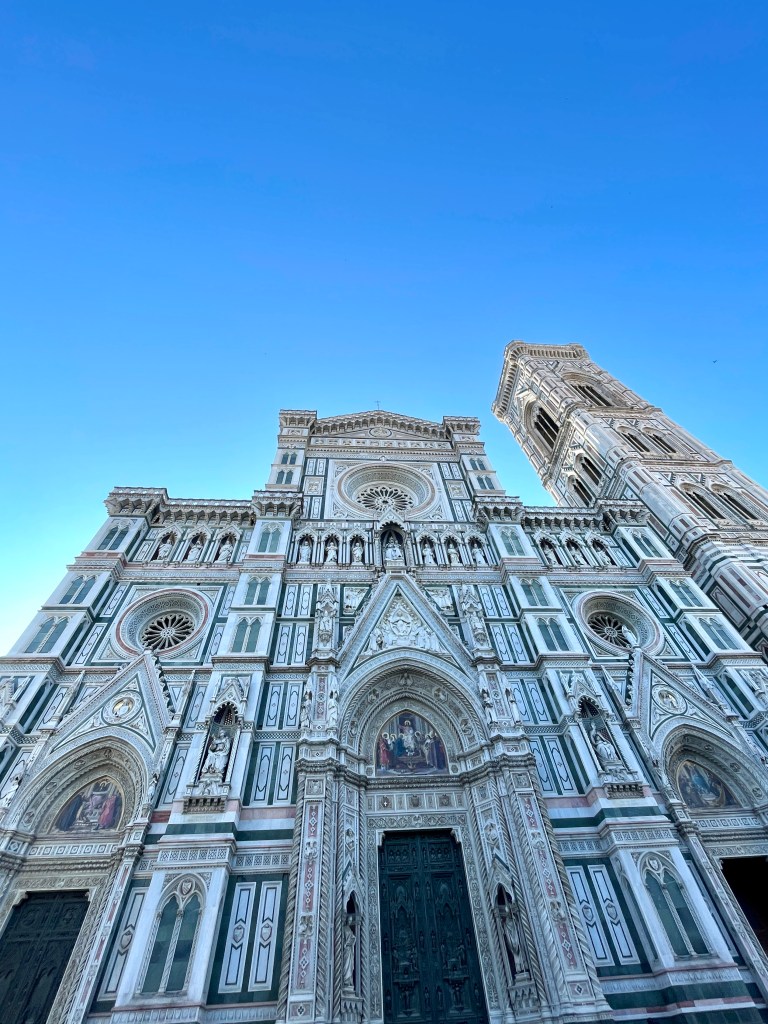
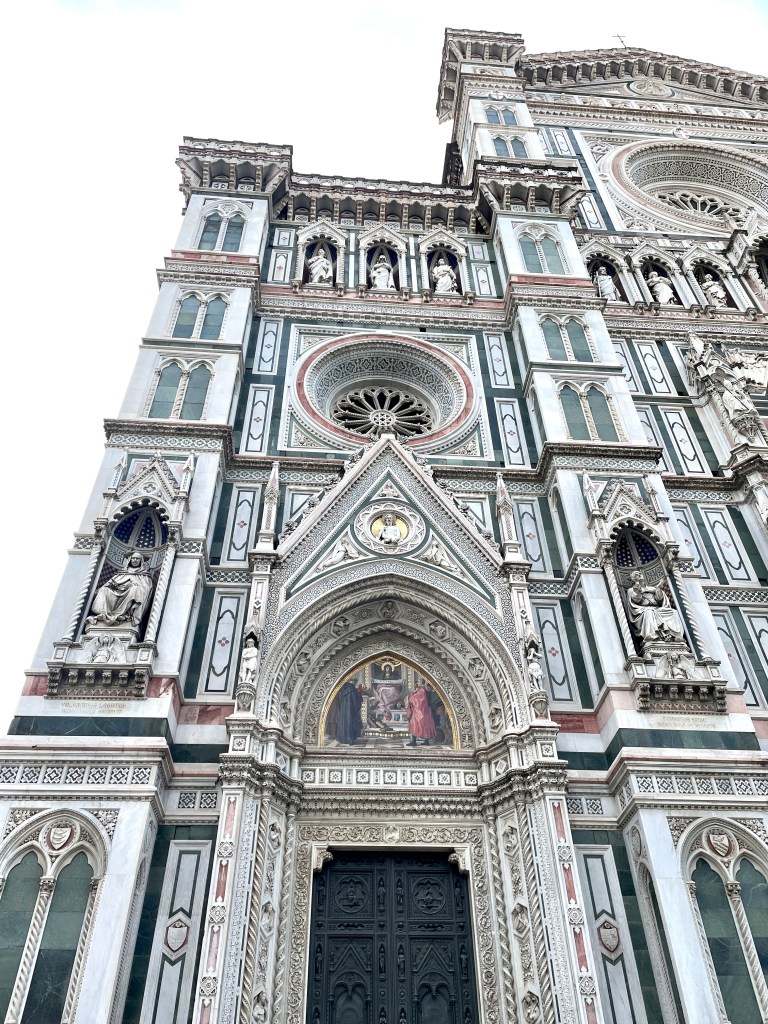
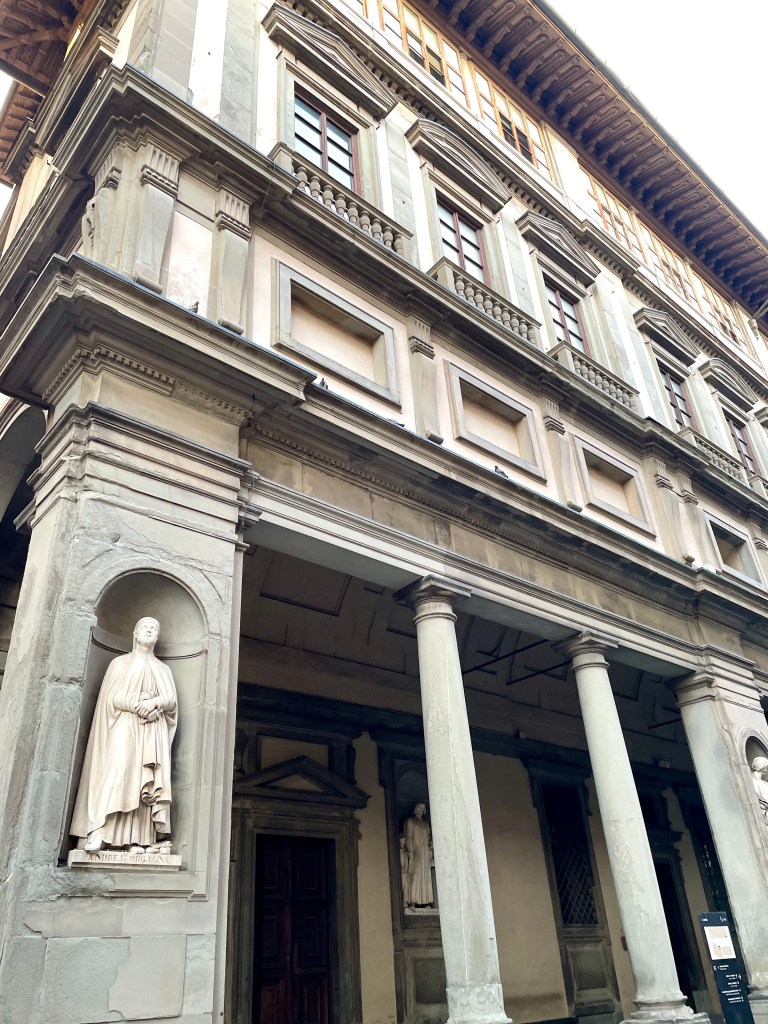
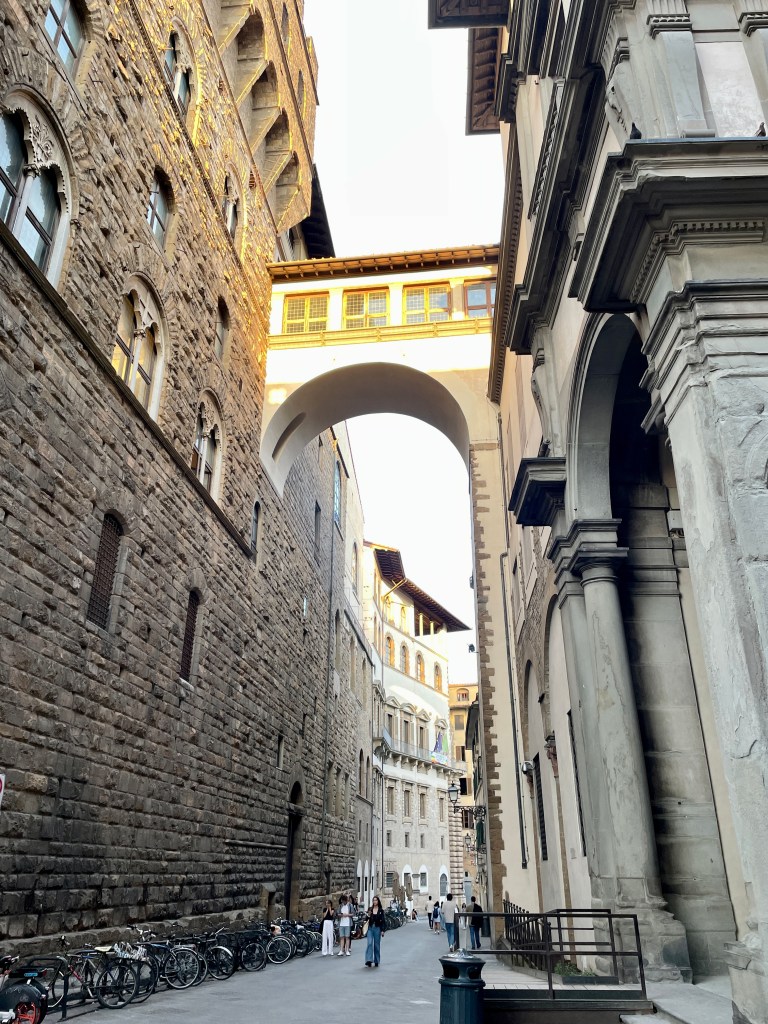
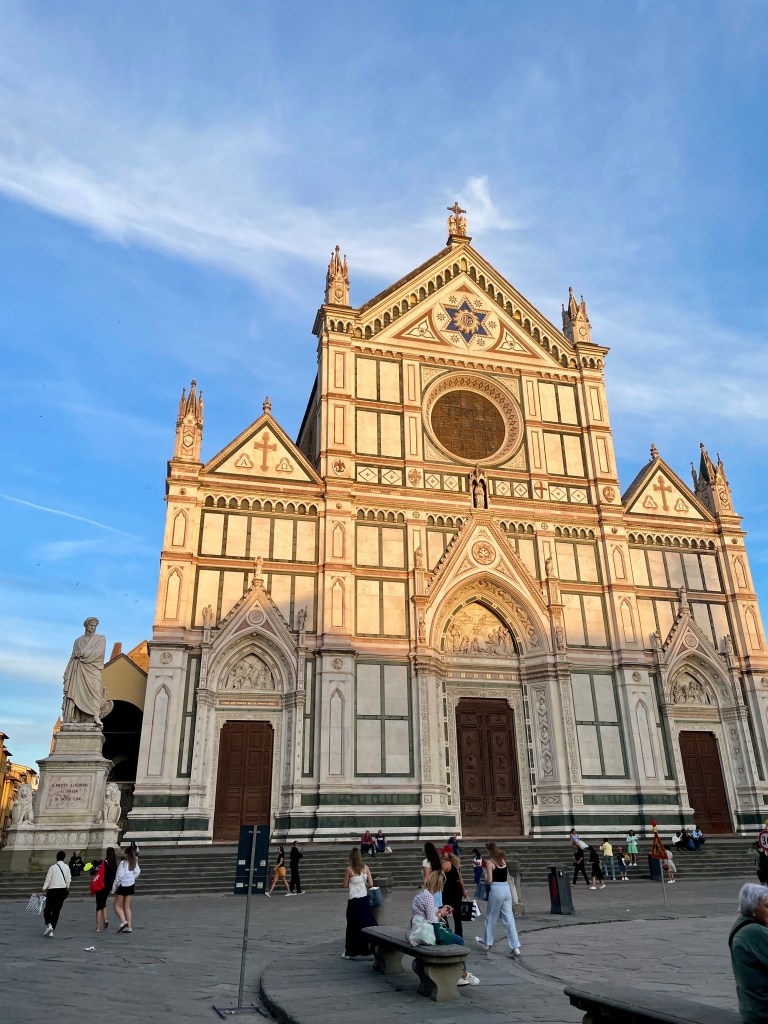
Take a walk outside Uffizi Gallery, to Centro Storico and enjoy the architecture.

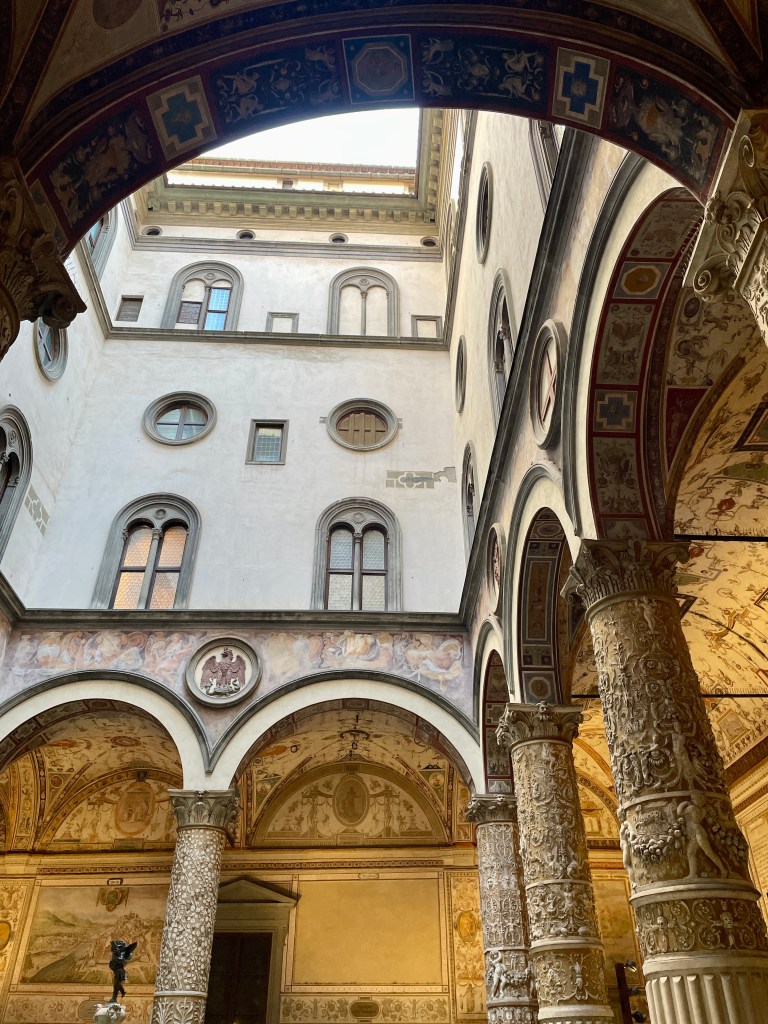
Palazzo Vecchio (Vecchio Palace)
Deeping dive into the Medici family saga (I will mention briefly below), this very spot witnessed a dramatic scene in 1478 – the execution of the Pazzi conspirators by a furious mob!
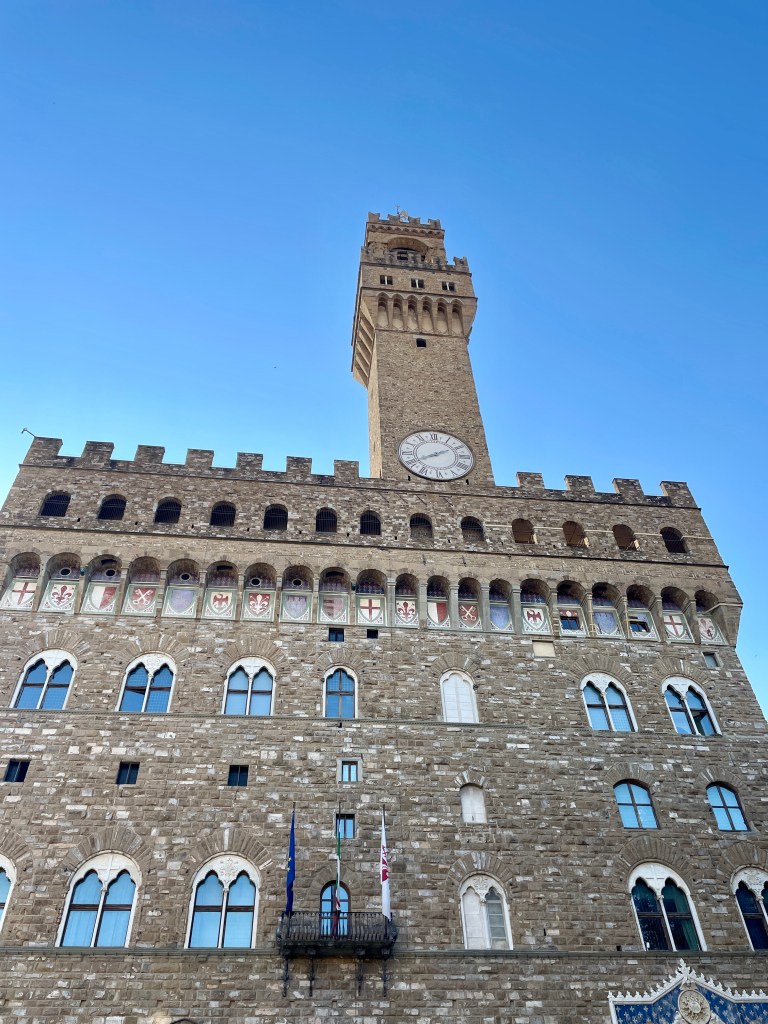
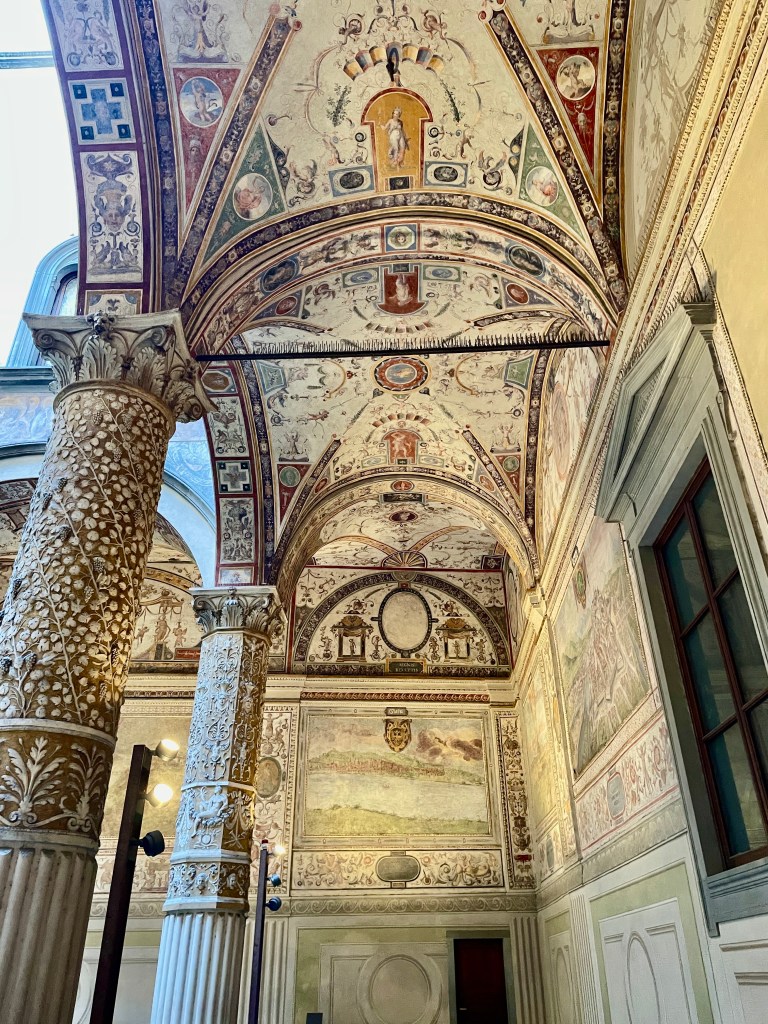
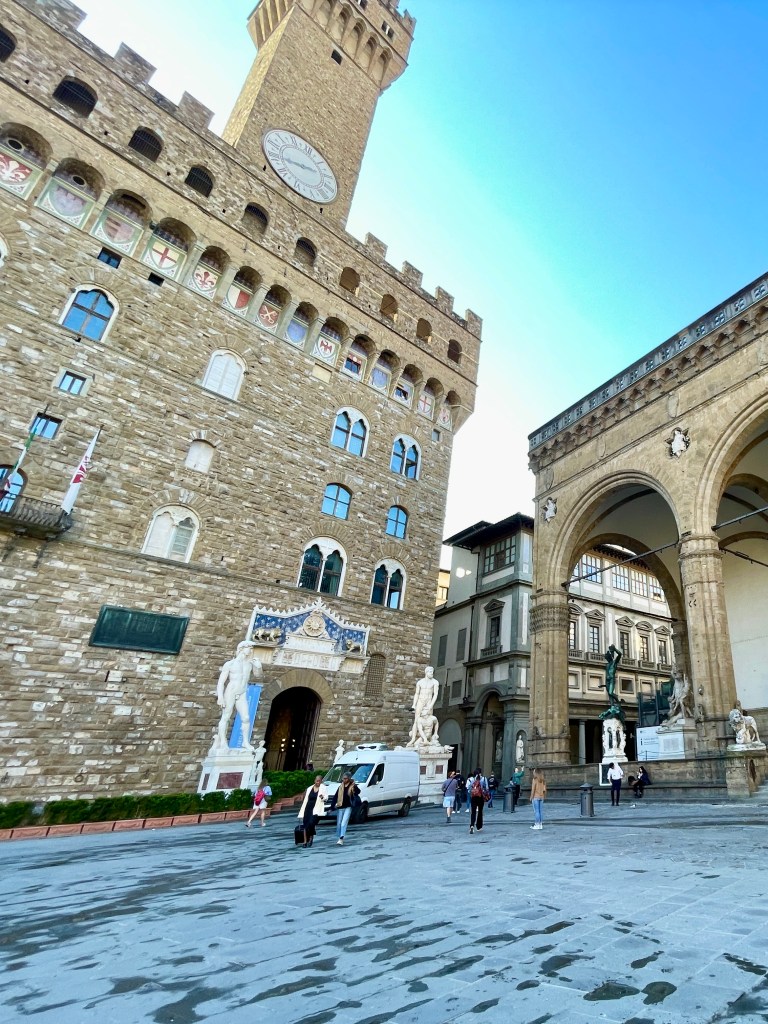
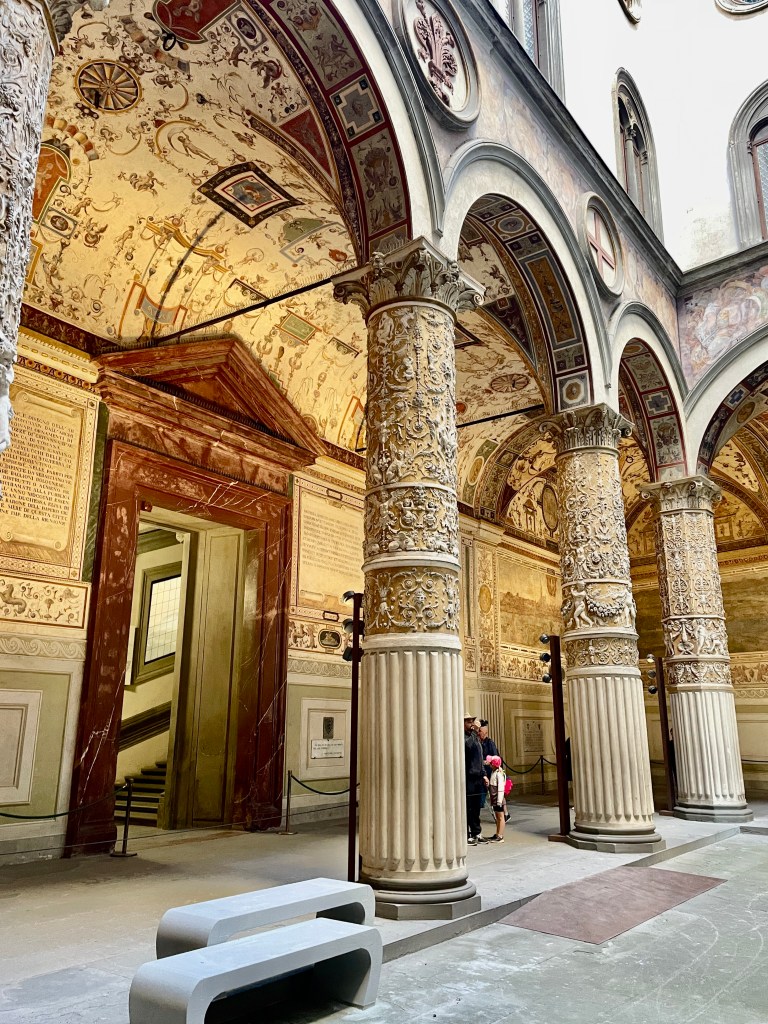
In front of the palace is a replica of David (by Michelangelo) in exact spot where the original were located before moving to the Galleria dell’Accademia.
The lower floor with relics and crypt was not super interesting. However, reaching the upper floor- New Sacristy with some of Michelangelo works is very fascinating to me. The saints statues on the top of the tomb of Lorenzo and Giuliano de’ Medici even show some hyperrealistic of the veins on the hands and feet. They were done by pupils after models by the master-Michelangelo.

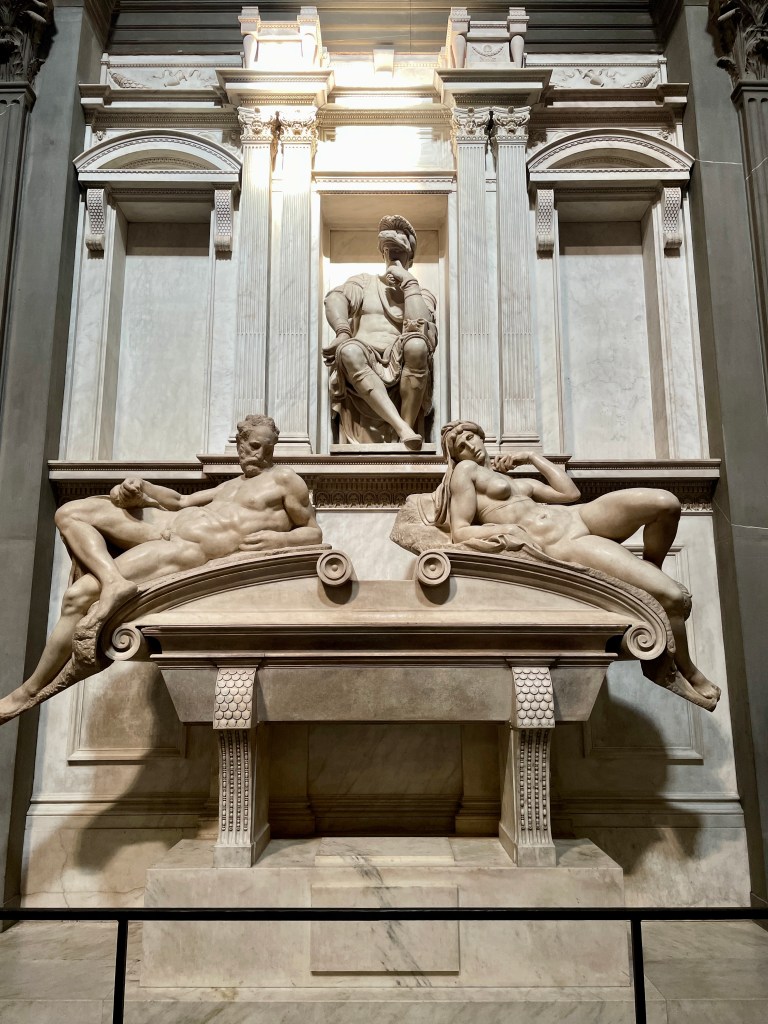
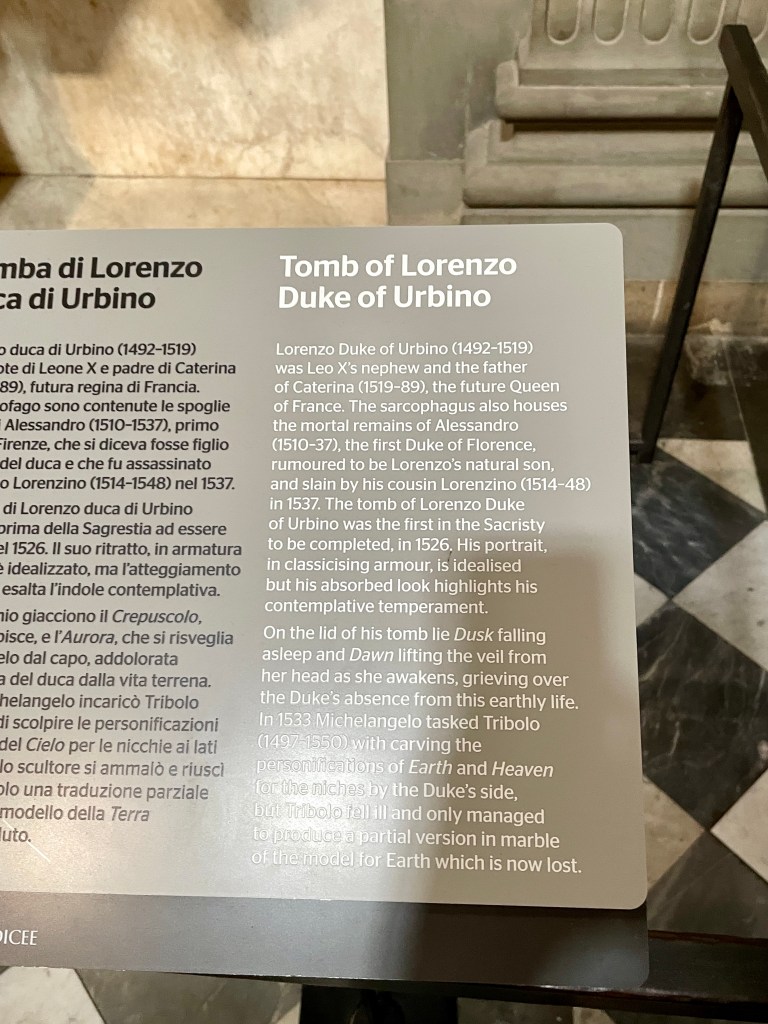
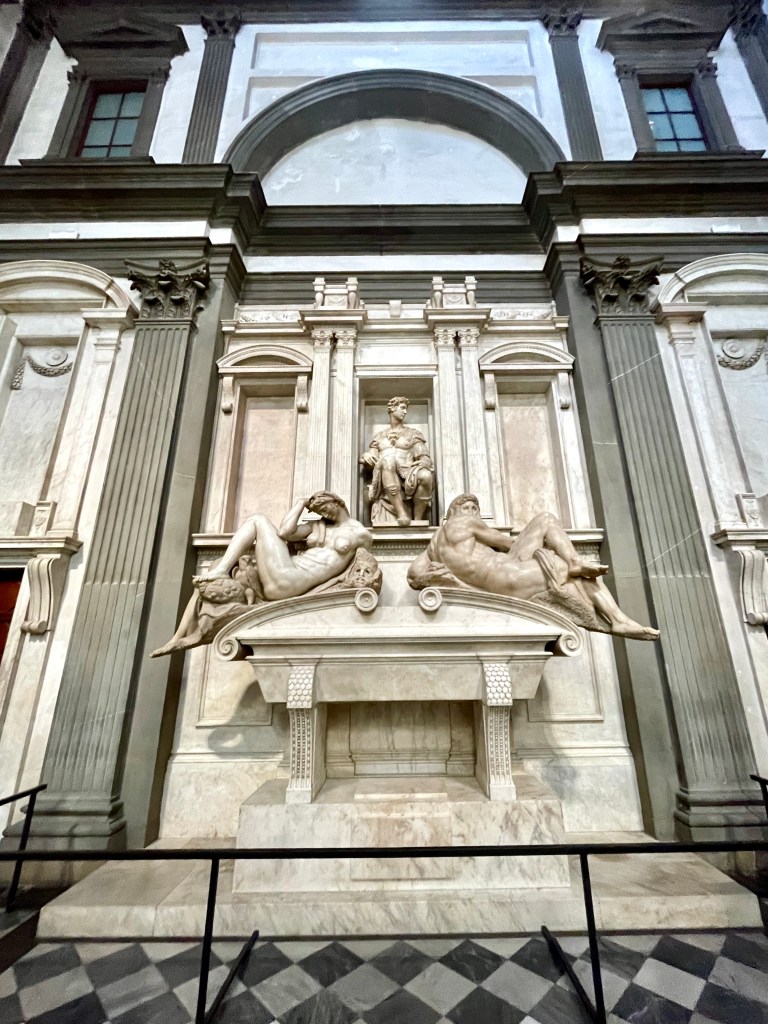
Tomb of Giuliano de’ Medici/ Giuliano Duke of Nemours
with the statues Day and Night
After getting hooked while looking up for more historical context of this noble family, (I seriously went down the rabbit hole for three days) , I discovered there’s actually a TV series about them. Guess what I’m watching next?
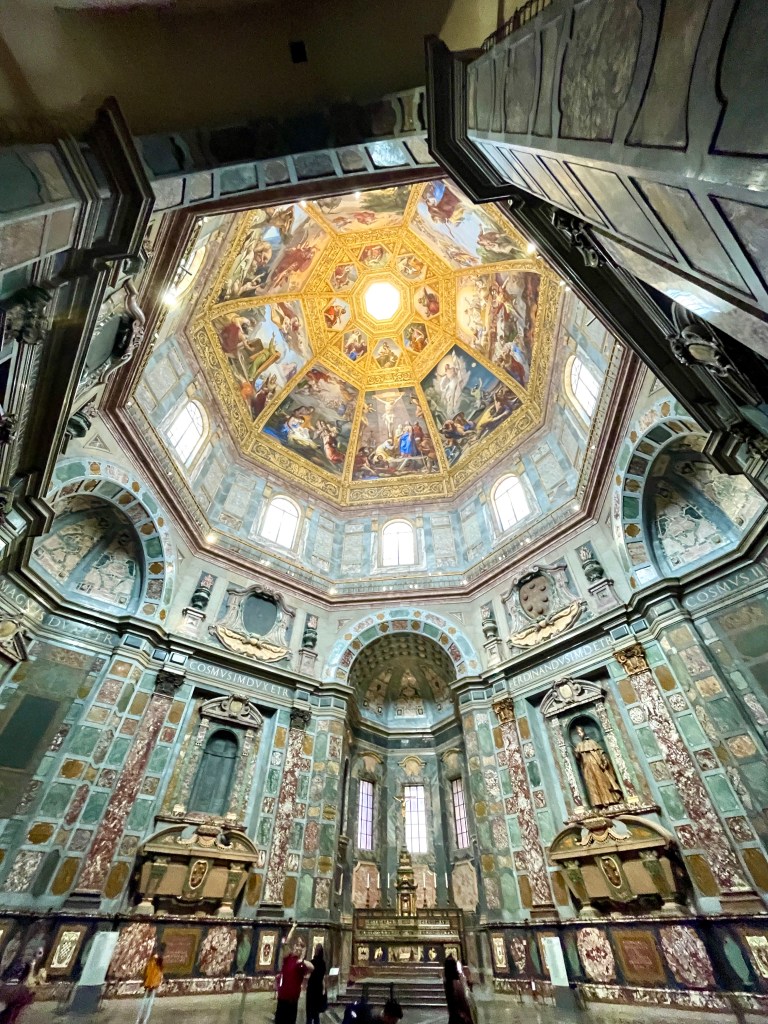
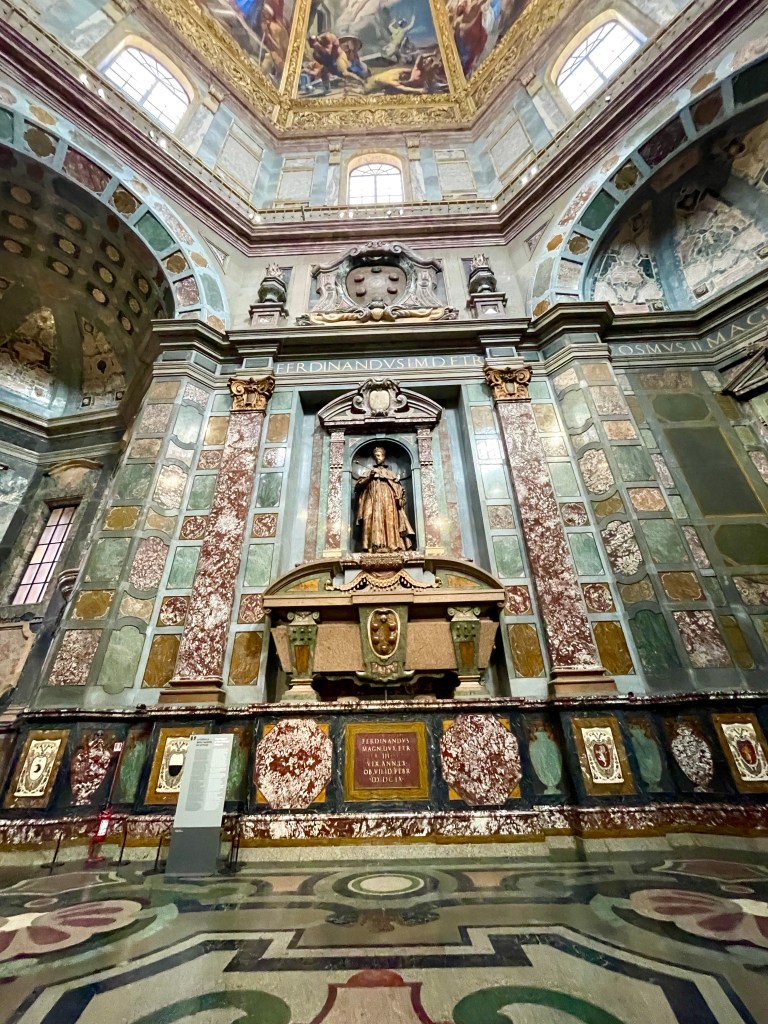
Chapel of the Princes. Only two of them are completed with the bronze statues topped the marvelous crypt with rare stone and marble. The other four were never continued, leaving the series unfinished with adorned crypts but without statues.

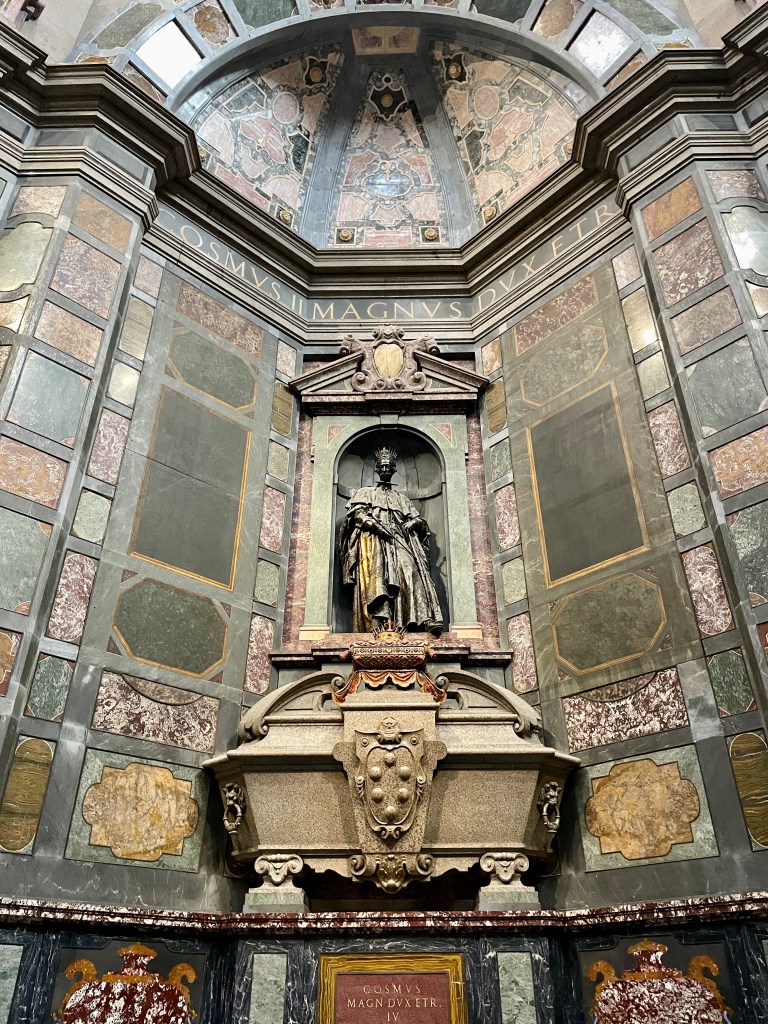
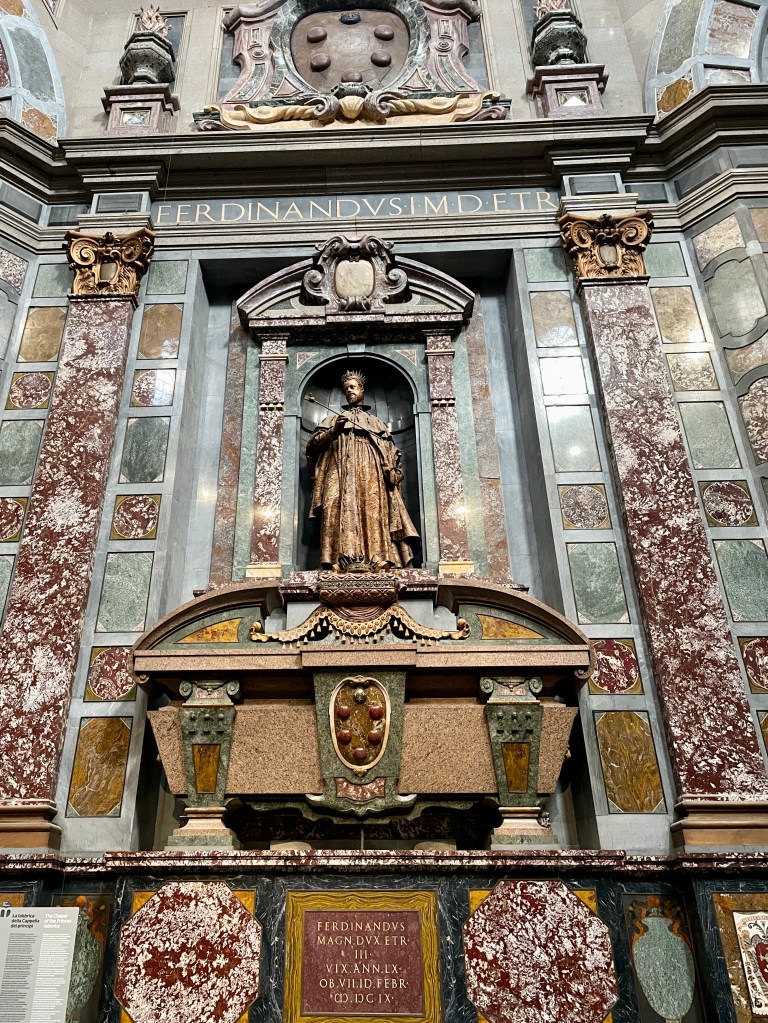
This is the family tree of Medici family

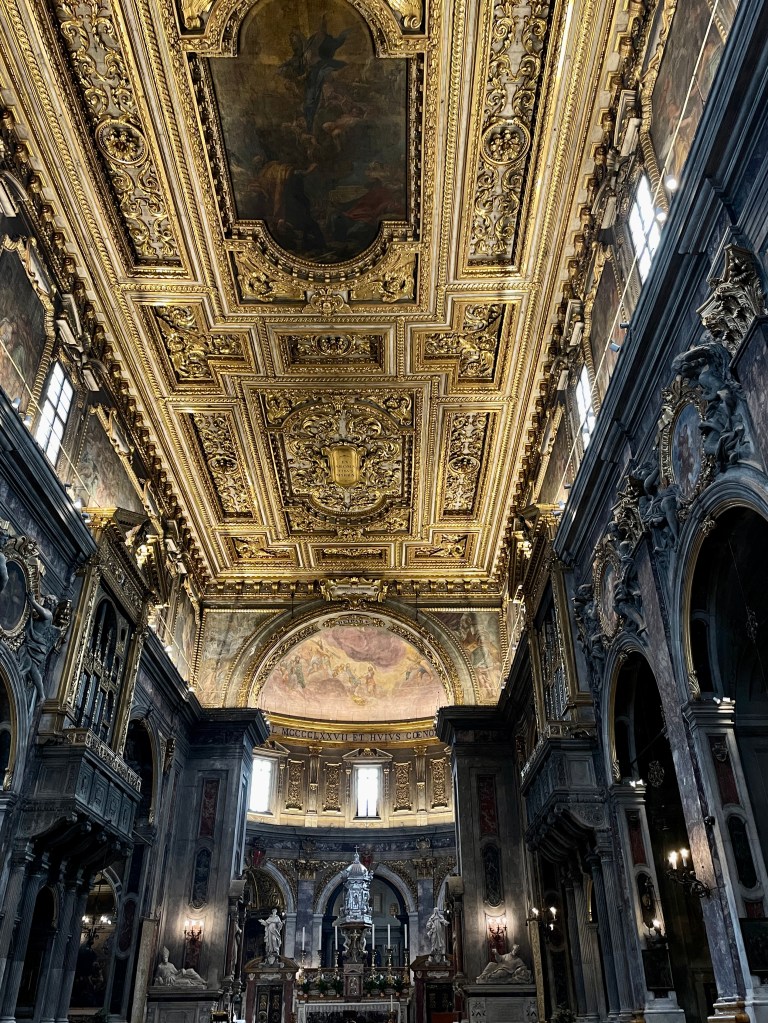
Chiesa di San Salvatore in Ognissanti: A Franciscan church located on the piazza in central (Centro Storico) that holds a hidden gem – its magnificent ceiling painting. The artistry is truly breathtaking. The use of shading, dimension, and depth creates such a sense of realism, I practically craned my neck trying to take it all in. I could almost imagine myself peering beyond the magnificent pillars and out onto the light-filled balcony.
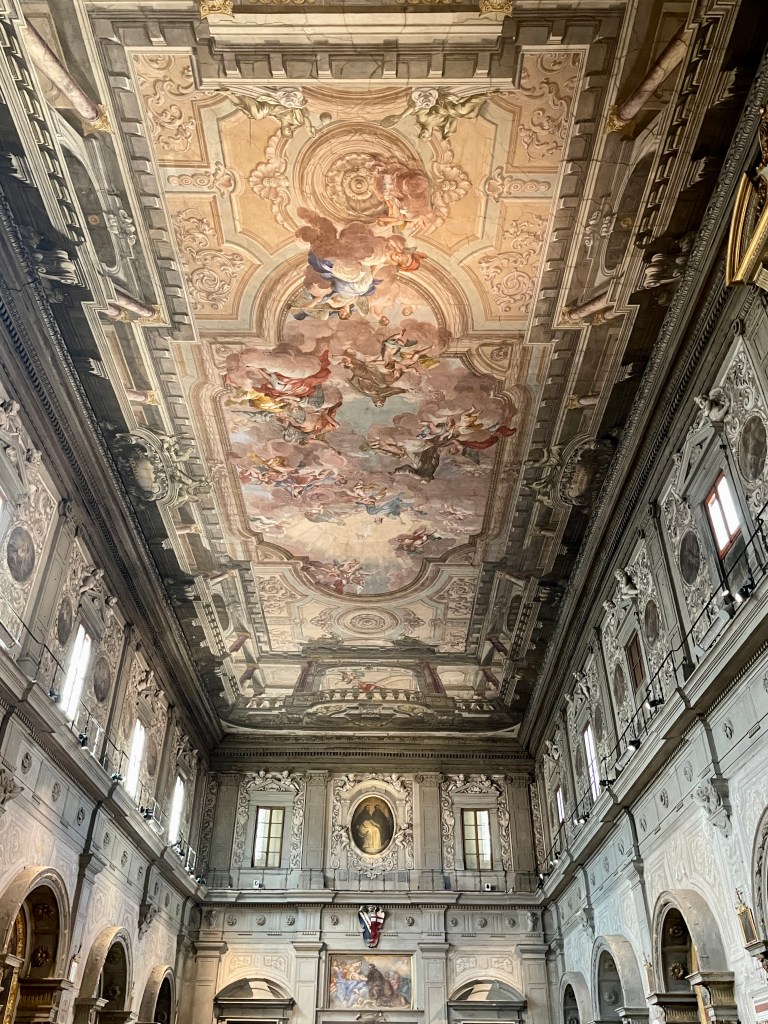
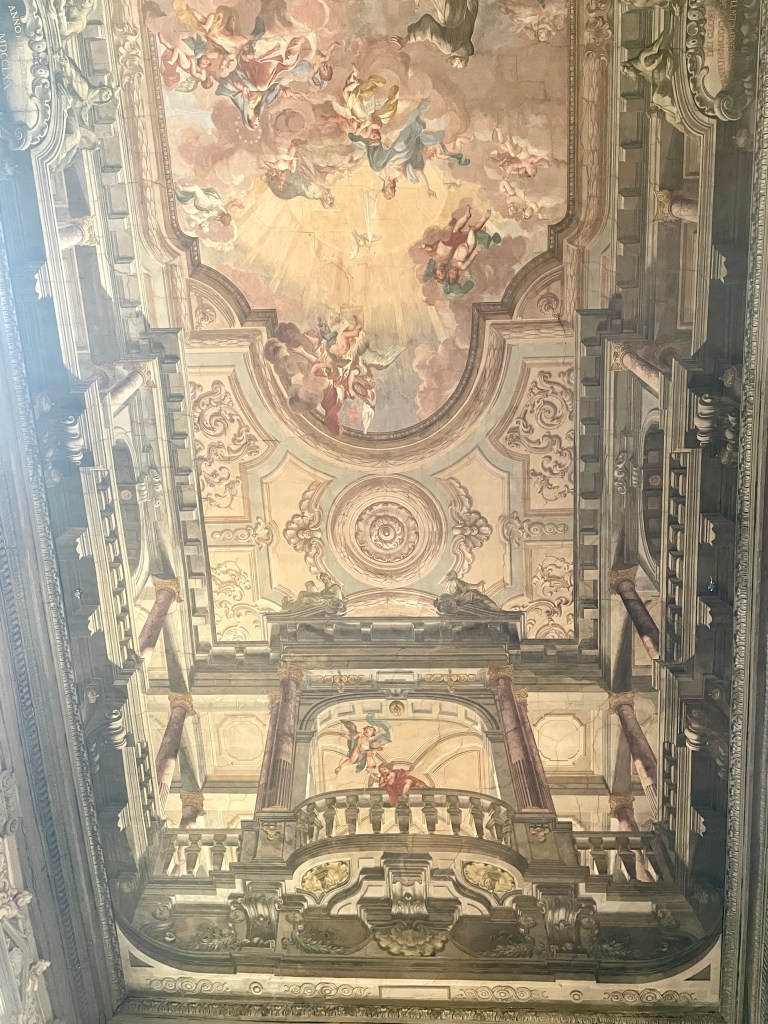

Le Galleria degli Uffizi: We decided to visit the Uffizi Gallery on a whim the day before and luckily snagged tickets online for €25 each. What a fantastic decision! Seeing the original works of the masters up close was an eye-opening experience. The details – the materials used, the brushstrokes, the dimension (specifically the Portrait of a Man with a Medal of Cosimo the Elder and the golden hair strands of The Birth of Venus by Botticelli is on another level when seeing in person), the subtle coatings – were simply impossible to capture in printed reproductions found in books and magazines.

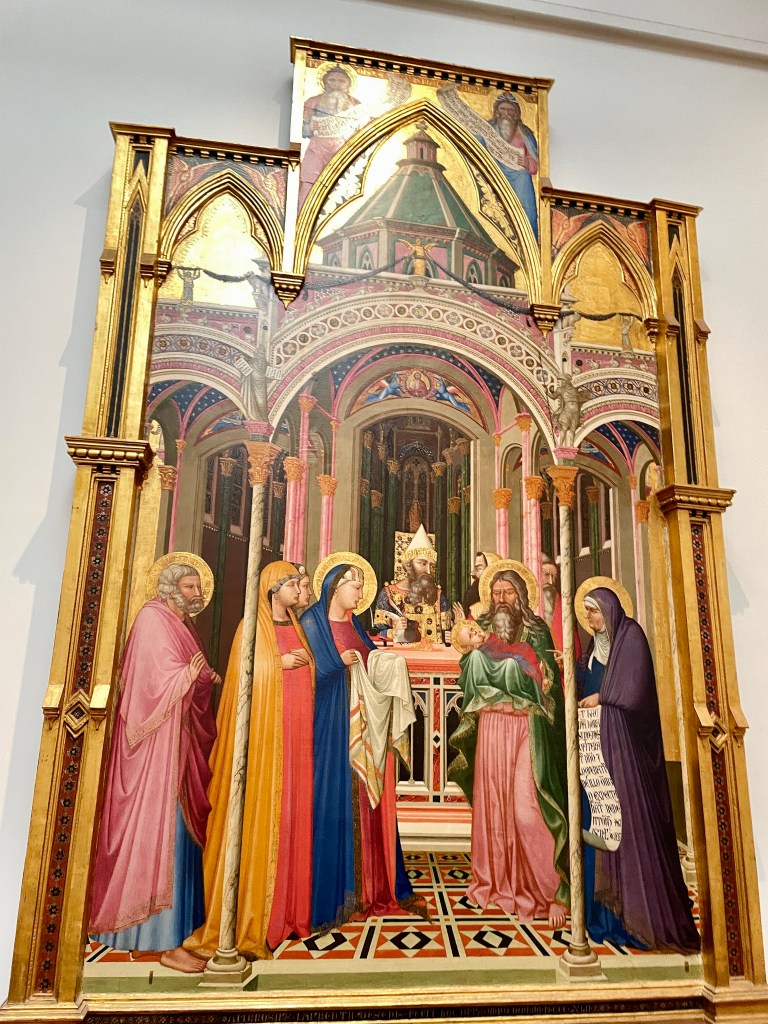
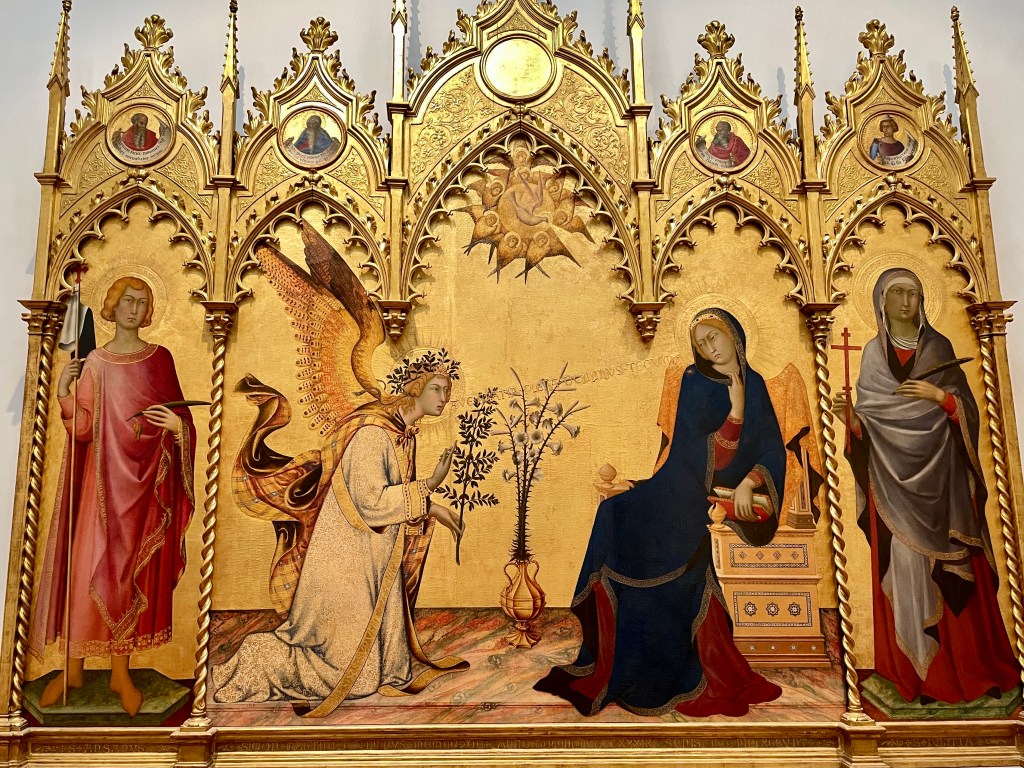
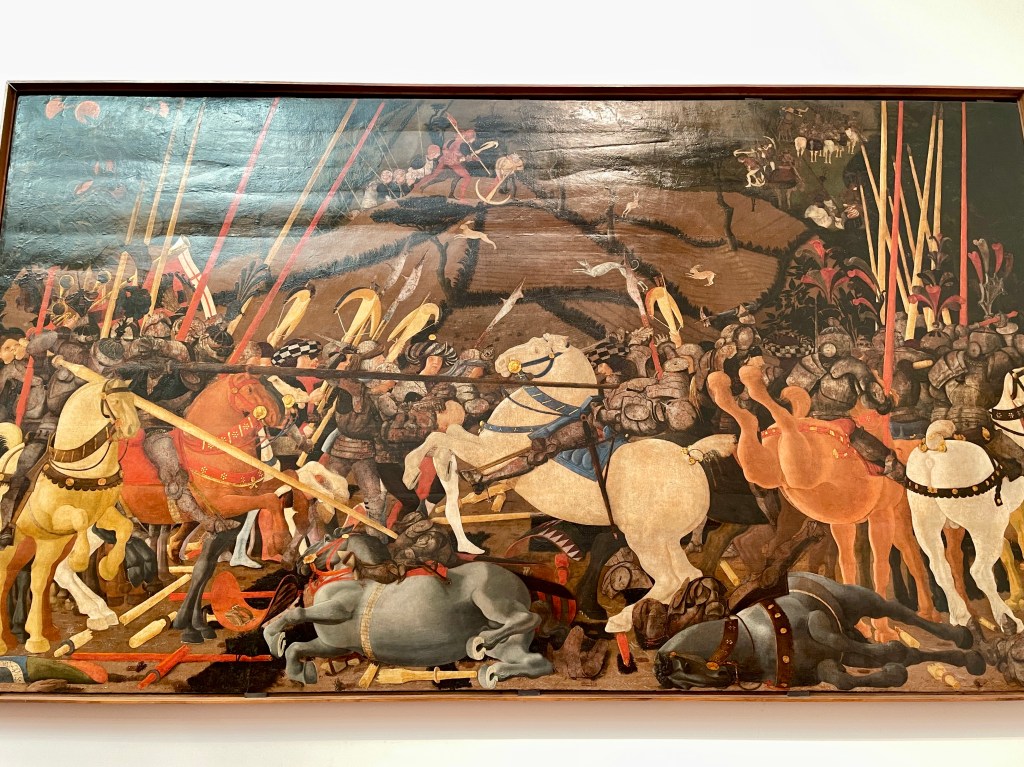

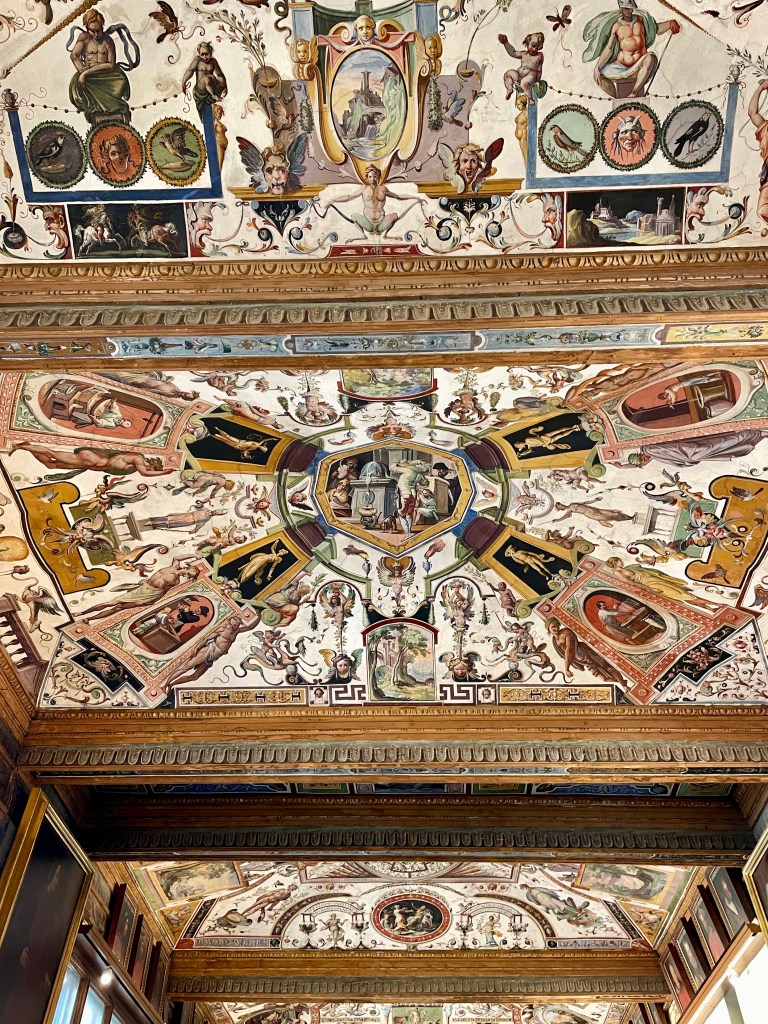
Here are some of the artists and their works that impressed me the most at the Uffizi:
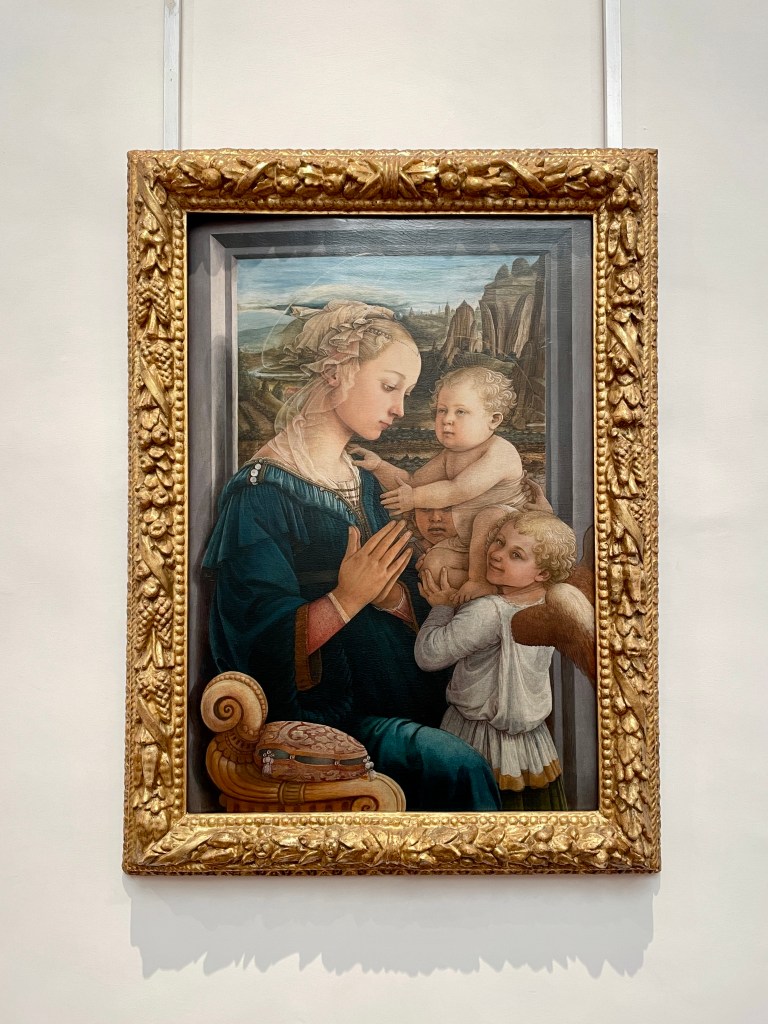
- Madonna and Child (Fillippo Lippi)- The early Renaissance master who taught many painters. The legend Sandro Botticelli is one of his distinguished pupils.
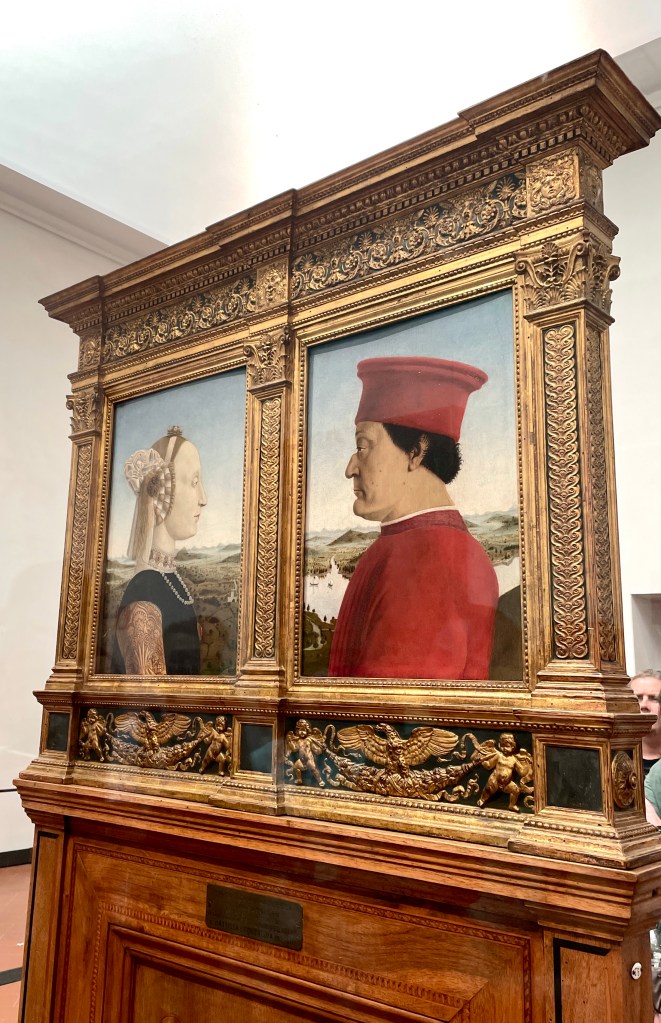
- Diptych of Federico da Montefeltro and Battista Sforza (Piero della Francesca/Piero di Benedetto)

An altar piece of the Seven Heavenly Virtues– oil on panel painting, originally intended to decorated the seat-backs in its audience hall on Piazza della Signoria, the square in front of Vecchio Palace- from left to right:

- Fortitude (Sandro Botticelli)- The identity of the model believed to be Lucrezia Donati, mistress of Lorenzo the Magnificent.
- Temperance (Piero del Pollaiolo)- ability to control over one’s instinct. The subject is portrayed mixing hot and cold water
- Faith (Piero del Pollaiolo)
- Charity (Piero del Pollaiolo): This was the first painting to be completed and delivered. After a delay, the commission was temporary transfer to Botticelli with the Fortitude before a second contract returning the commission to Piero workshop.
- Hope (Piero del Pollaiolo)
- Justice (Piero del Pollaiolo): Together with Fortitude, Temperance and Prudence, Justice was one of the cardinal Virtues required by mankind to live a life of righteousness.
- Prudence (Piero del Pollaiolo): she holds a mirror to see behind her and clutches a snake.


- Diptych of The Discovery of the Body of Holofernes and Judith Returns to Bethulia (small format tempera on panel)
- Annunciation (Sandro Botticelli): this wall painting originally belongs to the Hospital of San Martino alla Scala, an institution that took in orphans.
- * Spring (Sandro Botticelli (Florence 1480 c.): the painting on wood is a celebration of love, peace and prosperity. There are 138 different species of plant that have been identified.
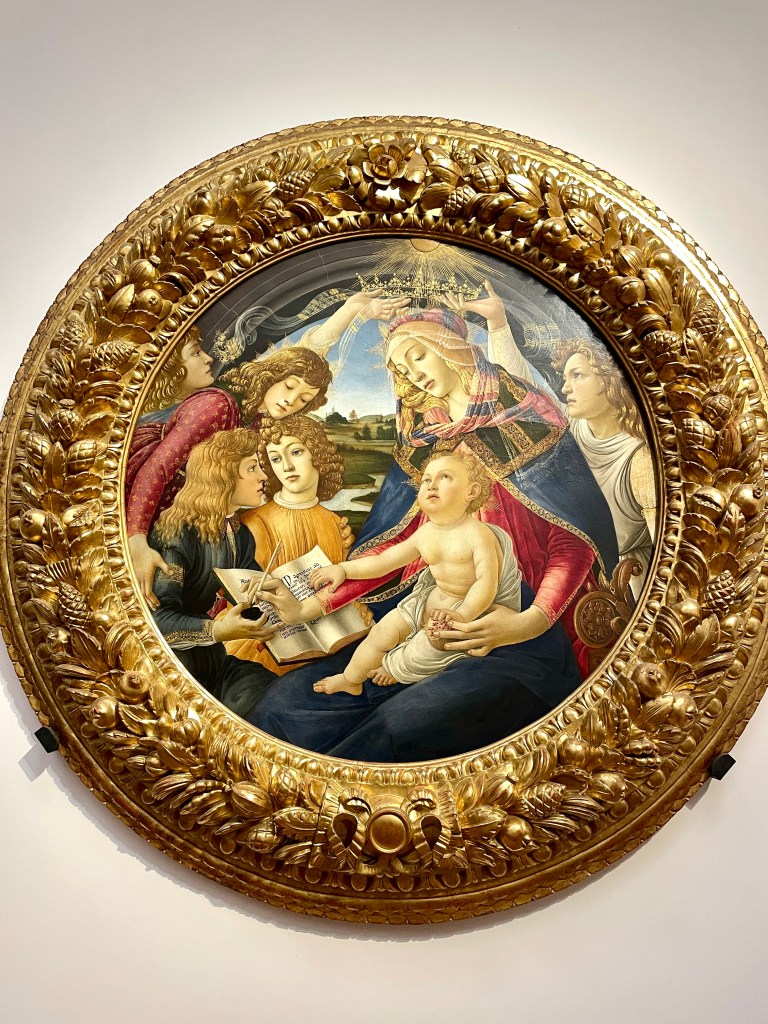
- Madonna of the Magnificat (Sandro Botticelli): The composition, sophisticated elegance of the garment and golden shining locks of hair made this work so outstanding.
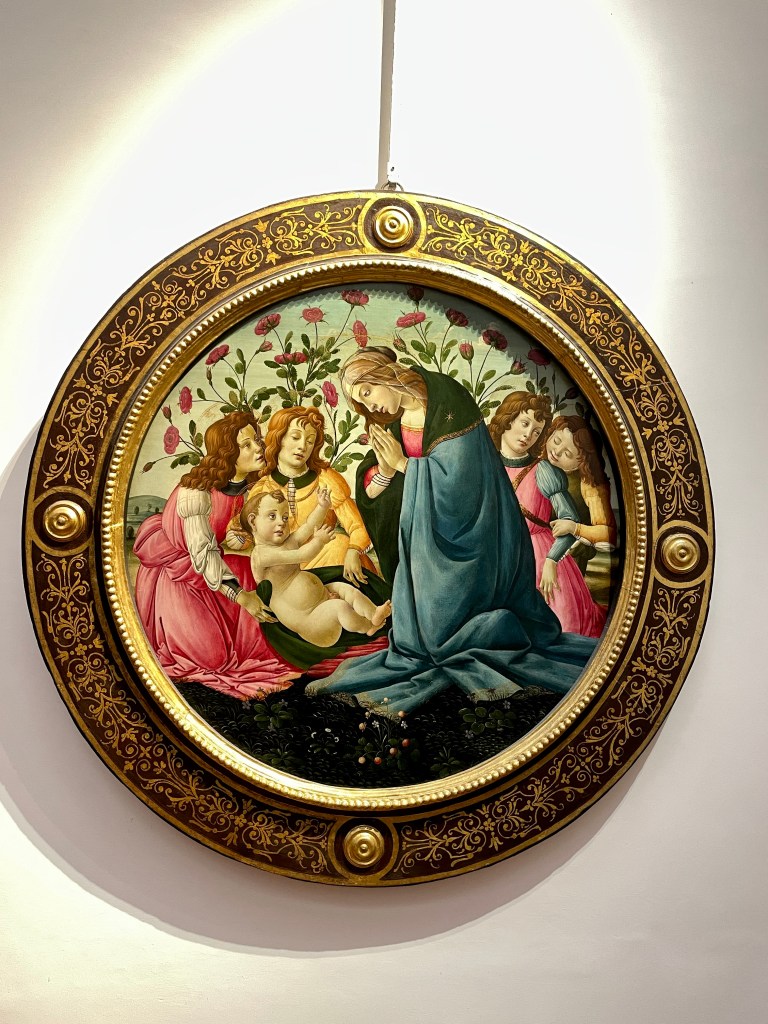
- Adoration of the Child with Angels (“Madonna of the Roses”)- left. As many of his later works, Botticelli had his assistants paint the ‘less important’ part of the composition and execute his creation.
- Virgin and Child with Angels (”Madonna of the Pomegranate”)
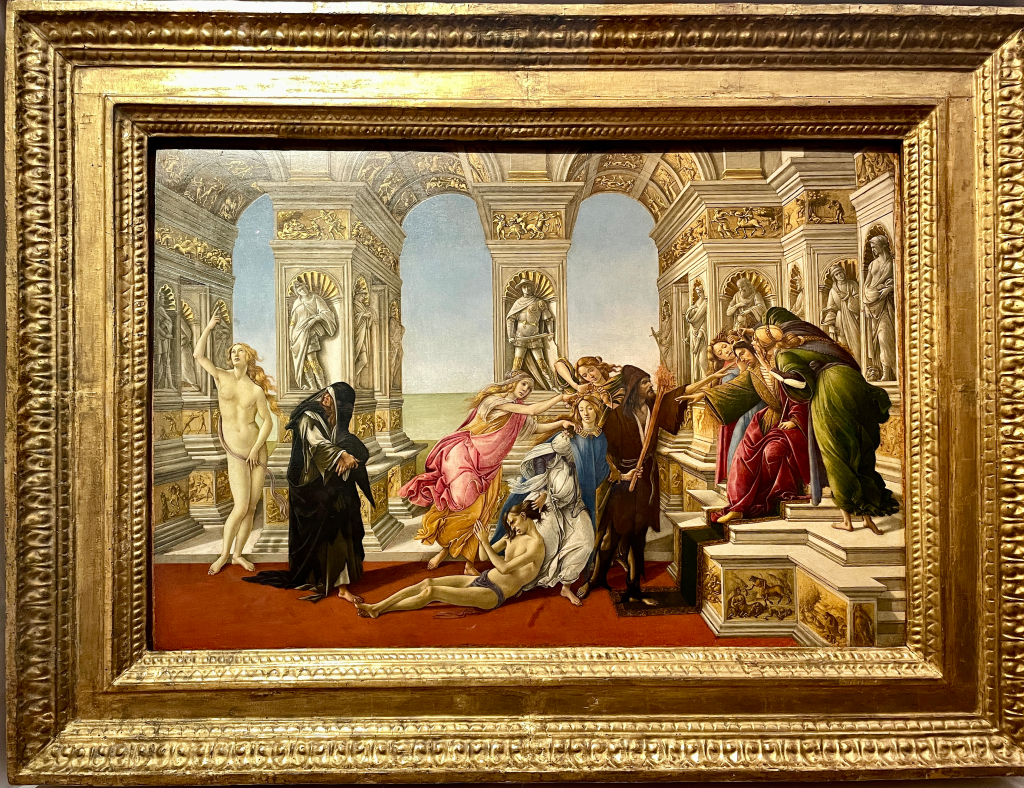
- The Calumny of Apelles
- Portrait of a Young Man Holding a Medallion ( Botticelli, c. 1475)- The model is holding a gilded stucco medallion bearing the effigy of Cosimo de Medici (1389-1464), a replica of the medal coined on the death of this great politician and patron of the arts. This is where the artist introduce a real, three dimensional element into painting.

- Birth of Venus– Unlike the Spring, this was painted on canvas, believed to be commissioned by a member of the Medici family. Aside from the famous Venus, I spent a good amount of time admiring the details and elegance of the young woman on the right – Hora, the goddess of Spring – who offers a flower-covered cloak to the newly arrived Venus. Botticelli’s masterful skill in depicting complex narratives and intricate details left me awestruck, especially seeing the masterpiece up close.
- Portrait of Francesco delle Opere
- Portraits of Agnolo and Maddalena Doni (Raphaelo Sanzio): with painting of the Flood and Deucalion and Pyrrha in the back.
- Portrait of Elisabetta Gonzaga, Duchess of Urbino (Raphael)
- Portrait of Guidubaldo da Montefeltro (Raphael)
- Annunciation (Leonardo da Vinci)- oil on wood:
The Archangel Gabriel’s annunciation to Mary is set in the garden of an elegant Renaissance palazzo. The angel is a tangible creature, casting his shadow on the lawn. His robust, realistic wings owe a debt to Leonardo’s study of bird flight. Certain anomalies, such as Mary’s excessively long right arm, disappear if you look at the painting from below and from the right, which suggests that the picture once graced a side altar in the church of San Bartolomeo a Monteoliveto in Florence, its original home.
- Portia (Fra Bartolomeo): she was the wife of Brutus, one of the conspirators involved in the murder of Caesar. After her husband took his own life, she too end her life by swallowing burning coals (on the ground to the right corner), becoming a symbol of wifely loyalty.
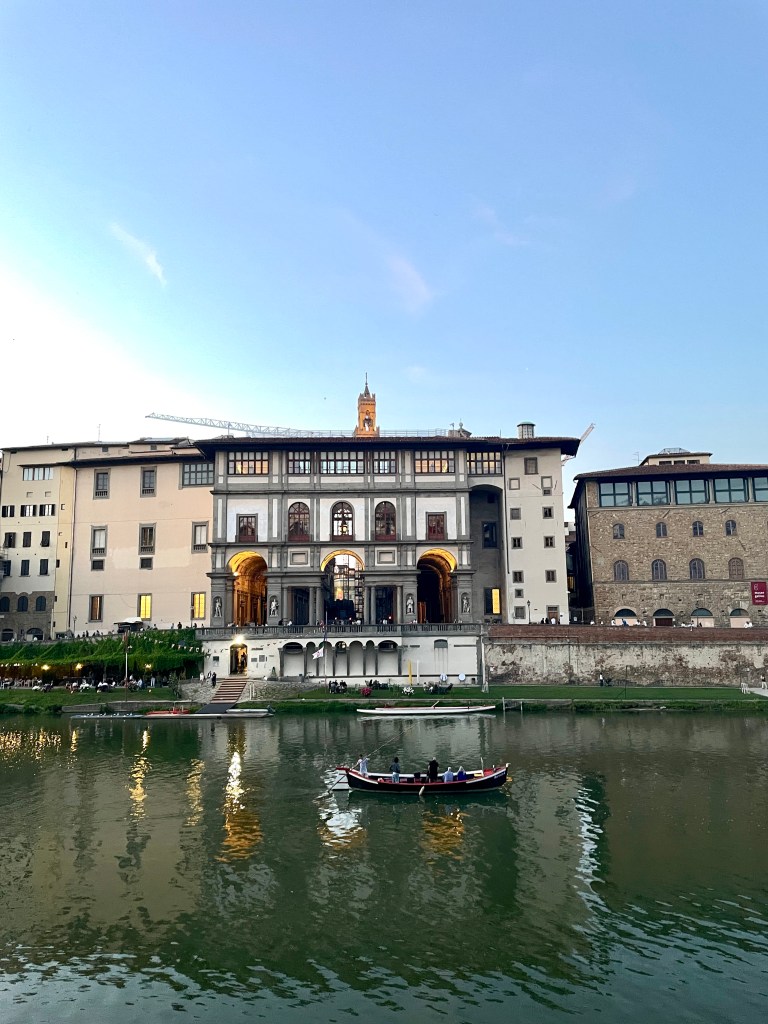
We took a walk across the Ponte Vecchio area (the famous bridge) and snapped this photo from the opposite side of the Uffizi Gallery. While it was definitely crowded, the area boasts a lovely selection of riverside restaurants.

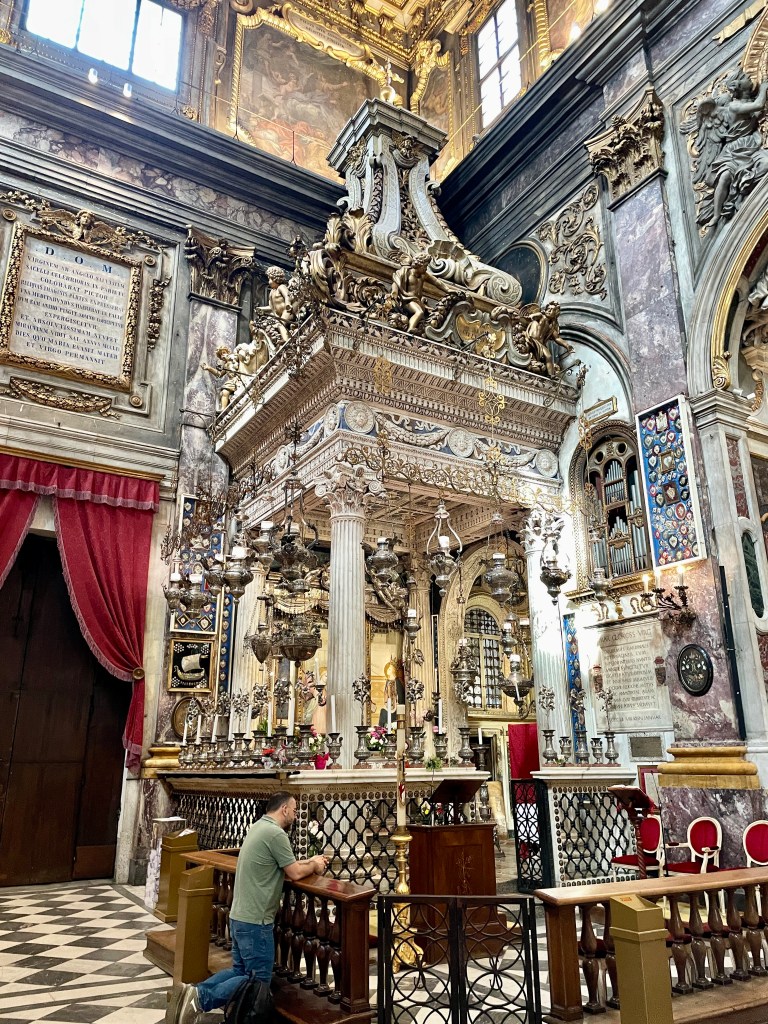
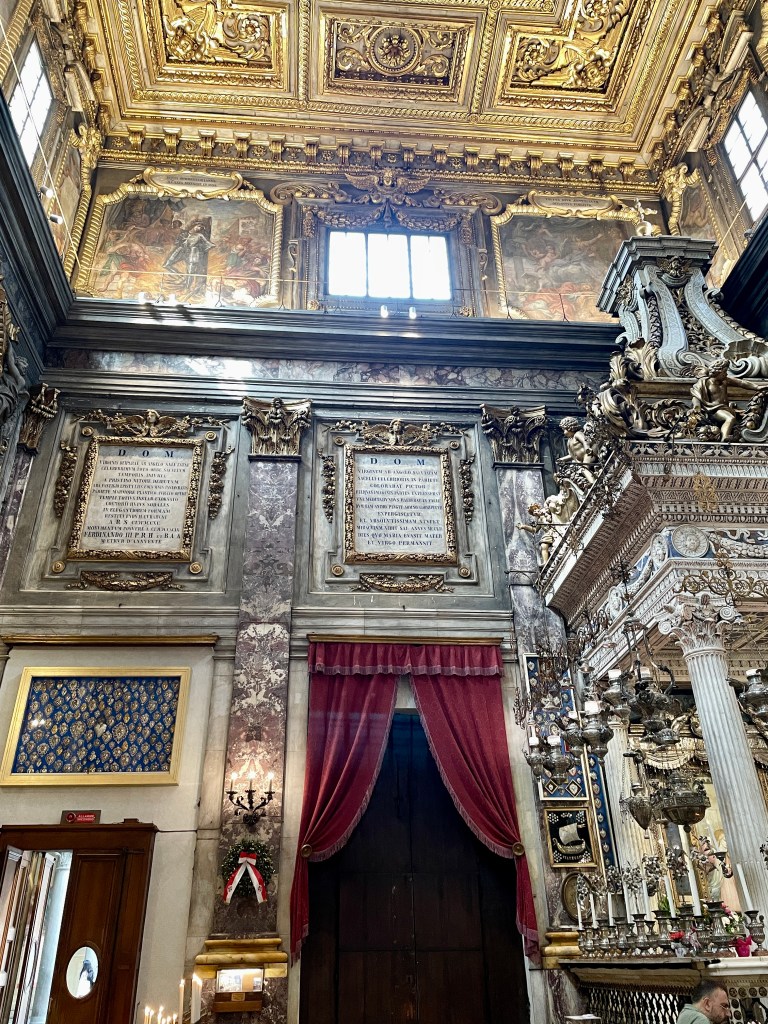
On the last morning, before taking off, we had a quick visit at the stunning The Basilica della Santissima Annunziata (Basilica of the Most Holy Annunciation) . This is a Renaissance style, Catholic minor basilica.
We didn’t make it to the:
- Palazzo Pitti (Pitti Palace)
- Reparata Crypt
- Galleria dell’Accademia
- Boboli Gardens
- National Archaeological Museum
- Museum of Opificio delle Pietre Dure
I really, really hope we can have another trip to Florence again and make it right!




 The Gartnerin
Leave a reply to Exploring Spain and Italy: A 3-week adventure – The Gartnerin Cancel reply